
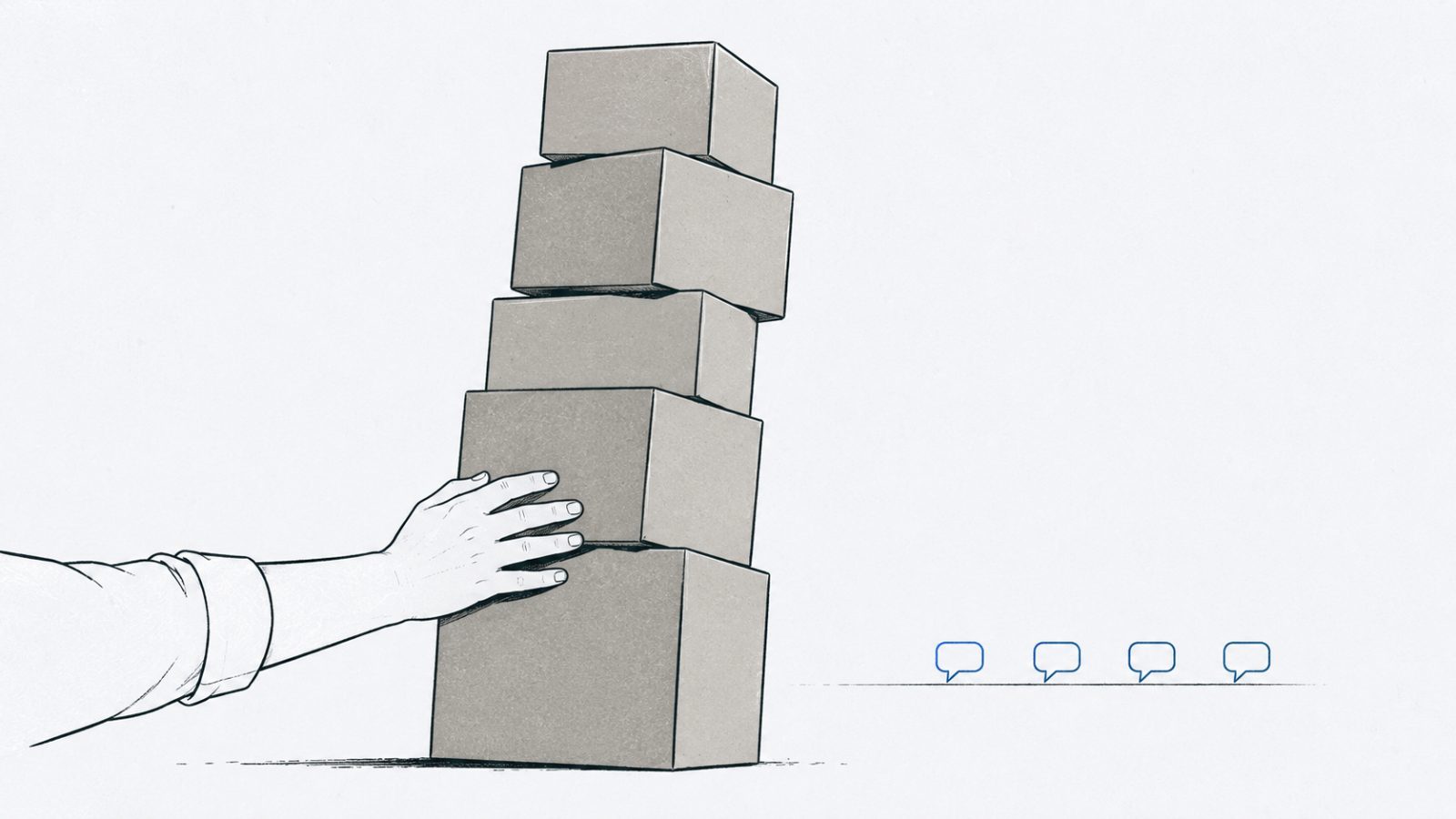
The objection I hear most about automation is not really about automation. "Our customers want a real person" is an argument about where a human belongs. It is a good argument. It is just aimed at the wrong steps.
Aim it correctly and the question stops being how much to automate. It becomes: which minutes of my staff's day actually change what a customer decides, and am I spending their time there or somewhere else? After 24 years operating storage, I can tell you most operators are spending it somewhere else.
What a human hour is worth, by task
Think of your team's time as inventory you have to allocate. Every contact a customer makes is a claim on that inventory, and the return varies enormously.
A price question, a gate code, a payment, a change of card on file - the return on a human handling these is close to zero, and often negative. The customer is not buying warmth here. They are buying speed. Nobody has ever left a five-star review for a warmly resent gate code. Whoever answers the "how much is a unit" fastest, at whatever hour it gets asked, tends to get the rental. A person in that loop is a delay dressed up as service.
Now the other end. A move-in walkthrough for someone anxious about whether their things will be safe. A billing dispute where the tenant is already angry and one canned reply makes it a review. A downsizing after a death in the family, boxes that are not really boxes. A contractor who wants six units and someone who will actually pick up and help him plan it. Put a capable, unhurried person here and you change the outcome - the rental, the retention, the referral, the one-star that never gets written.
The misallocation
Here is the trap almost every front desk falls into. Your best person spends the day quoting prices and resending codes - the zero-return work - and when the anxious mover or the furious tenant finally reaches them, they are mid-quote on another line. You paid for the human touch and then handed it to the customer who needed it least. Run that across ten or twenty sites and you have an entire payroll pointed at the low-value end of the day, answering the same question a robot answers better, while the moments that decide reviews and renewals wait on hold.
Automating the routine is not about cutting that person. It is about giving them back the hours the routine was eating, then pointing those hours at the handful of moments that decide whether a customer stays and talks.
Sort a month and see
One exercise settles the debate at your own sites. Take a month of every contact - calls, forms, chats, walk-ins - and drop each into one of two buckets: did this need a person, or did it just need a correct answer, fast.
The "just needed an answer" bucket will be huge. Prices, availability, hours, codes, receipts. The "needed a person" bucket will be small and heavy: the disputes, the damage, the distress, the walkthroughs. Automate the first bucket without apology. Staff the second with your strongest people and give them the authority to actually resolve things, because being better at that small bucket than anyone else in your market is the entire payoff for automating the large one.
Your customers do want a person. Just not the night they are asking what a unit costs before a weekend move. Answer that in seconds, and keep your people free for the morning someone walks in over their head.
Deciding which contacts get automated and which get a person is a design choice, not something to leave to whoever happens to be at the counter. Mapping that across your sites is part of what the Blueprint settles.
Start with a Blueprint